Sunday, August 28, 2011

ASU hosts Visayas-wide forum on SUCs-private sector partnerships

By Sally R. Villasis

With reports from Rhea V. Martesano


The Aklan State University (ASU) hosted the Forum on SUCs (State Universities and Colleges)-Private Partnership on Education Economic Zones on August 17–19, 2011 at the ASU Review Center in Banga, Aklan.


The first in a series of four, the forum convened presidents, vice-presidents for academic affairs, vice-presidents for research and extension, vice-presidents for production and business of the SUCs and industry representatives from the three regions 6, 7 and 8, all of Visayas.


Led by the Commission on Higher Education (CHED) and the Philippine Association of State Universities and Colleges (PASUC), the said forum sought to provide venue for sharing the best practices on SUCs-Private Partnership and exploring potential partnerships with the private sector.


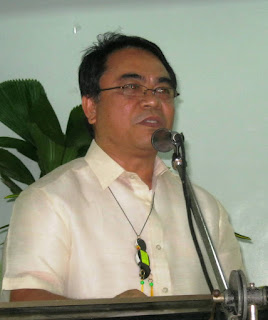
In his keynote address, Mr. Oscar A. Torralba, chair of the agri-business countryside development committee of the Management Association of the Philippines and CHED’s Technical Panel for Business and Management, presented the salient points of the Economic Education Zones (EEZ) as a Platform for Government-Industry-Academe (GIA) Public-Private Partnerships (PPP) among SUCs.


According to Torralba, SUCs today face intense competition for opportunities and priorities in fiscal allocation with threats of budget deficits and increasing demands by the globalized market. Therefore, it is imperative for SUCs to employ “innovative approaches in facing these harsh realities.” It was in this vein that EEZ was conceptualized.


EEZ is designed to transform an SUC from being traditional, budget-based and grant-driven into an enterprising institution which effectively exploits its natural resource endowments. Under the same approach, SUCs are encouraged to engage in the commercial application of their research and knowledge base and the strong participation of the private sector for long-term cooperation.


For her part, Dr. Virginia Resurreccion, director of CHED’s Regional Office 6, stressed on the importance of raising the country’s human capital to help address the global issue on poverty. For Resurreccion, there is a need for a curriculum that offers quality education and training of students who can compete in the global market and whose skills and expertise can match the emerging trends in the industry.


While these can be hindered by lack of economic resources or similar financial constraints, public and private partnerships can provide key mechanisms for flexibility and accommodate growth in SUCs. For one, newly conceptualized SUC curriculums could help create jobs and help spur economic growth.


According to Resurreccion, partnerships that can be forged between SUCs and private sectors can inspire SUCs themselves to focus on research, training and development. All these efforts can provide inexpensive offshoots to the growth of knowledge economy. Furthermore, partnering with the private sector can help address the need for financial support for SUCs’ R&D activities.


The Visayas-wide forum featured paper presentations on curricular enrichment and development, enterprise development, intellectual property management, technology business incubation and technology commercialization, business process outsourcing and infrastructure and physical facilities development.


ASU reaps awards in 21st R&D symposium

By Sally R. Villasis

Representative

Regional Applied Communications Group

Aklan State University


Three research studies of Aklan State University (ASU) won the top prizes in the 21st Regional Symposium on Research and Development Highlights (RSRDH) led by the Western Visayas Agriculture and Resources Research and Development Consortium (WESVARRDEC) on August 22, 2011 at the Central Philippine University in Iloilo City.


The “Inventory and Bioprospecting of Natural Dye-Yielding Plants in the Province of Aklan” won the top spot in the poster category and third place in the research category. The study was a joint effort of Lelisa Teodosio, Malco Teodosio, Rogelio Felizardo, Arlene dela Cruz, Anna Mae Relingo, Edito Agustin, Roberto Saladar, Margie Sumanga and Marilyn Romaquin of said university. Meanwhile, the “Yield and Fruit Quality of Rambutan under Different Timing and Levels of GA3 Application” by Marilyn Romaquin, Michael Ibisate and Eva Orlina won second in the poster category.


Collaborators of the winning research paper
share the award and recognition for ASU.


Other papers presented in the symposium were the “Inventory on Mangrove-associated Mollusks, Fish and Crustacean Species in ASU-CFMS Reforested Project at Isla Kapispisan, Pinamuk-an, New Washington, Aklan” authored by Regvil de Jose, Eduardo Pastrana and Ryan Basina, and “Sensory Evaluation of Processed Nipa Fruit for Product Development” conducted by Perlita Israel, Rino Andro Inocencio and Marivel Villorente.


Designed to provide venues for discussion of R&D projects and activities in the region and promote collaboration among its member agencies, WESVARRDEC’s 21st RSRDH sought to evaluate researches conducted by the different member agencies and promote interaction between and among


Award-winning posters from ASU

Saturday, August 27, 2011

21st RSRDH Winners

Winners in the 21st Regional Symposium on Research and Development Highlights

Henry Luce III Library, Central Philippine University, Jaro, Iloilo City

22 August 2011


RESEARCH CATEGORY


First Place

Development of Site-Specific Nutrient Management (SSNM) Recommendations for Irrigated Rice in Region VI by Greta Gabinete, Hector Pe
ñaranda, Benjamin Gutierrez and Roland Buresh


Second Place

Field Testing of ICRISAT Legume Varieties and Technologies in Selected Regions of the Philippines by Corazon Arroyo and Nenita Sodusta, Department of Agriculture-Western Visayas Integrated Agricultural Research Center


Third Place

Inventory and Bio-prospecting of Natural Dye-Yielding Plants in the Province of Aklan by Marilyn Romaquin, Lelisa Teodosio, et.al., Aklan State University


Evaluators

Dr. Rolando Labios, DA-BAR

Dr. Marcelino Siladan, PCARRD

Engr. Emelyn Flores, DOST 6


DEVELOPMENT CATEGORY


First Place

Bio Power-up Fuel Additive by Paolo Petalver and Dioscoro Marañon, Jr. of West Negros College-Research and Development Foundation, Inc.


Second Place

Low-Density Biomass Charcoal Maker by Paolo Petalver and Dioscoro Marañon, Jr. of West Negros College-Research and Development Foundation, Inc.


Third Place

SPD Multi-function Food Processing Equipment by Paolo Petalver and Dioscoro Mara
ñon, Jr. of West Negros College-Research and Development Foundation, Inc.

Evaluators

Mr. Ramon Peñalosa, Jr., MS, WESVARRDEC

Engr. Rowen Gelonga, DOST 6

Dr. Juanito Batalon, PCARRD

Engr. Gilberto Altura, NEDA 6


POSTER CATEGORY


First Place

Inventory and Bioprospecting of Natural Dye-Yielding Plants in the Province of Aklan, Aklan State University


Second Place

Yield and Fruit Quality of Rambutan under Different Timing and Levels of GA3 Application, Aklan State University


Third Place

Performance of Selected Indigenous Upland Rice through Adoption of Suitable Planting Methods under Rainfed Lowlands, Capiz State University


Evaluators

Dr. Ma. Luisa Mabunay, UP Visayas

Dr. Ma. Cielito Siladan, FPRDI

Ms. Lilian Diana Parreño, GSC


Friday, August 12, 2011

PCARRD meets with Negros FITS centers on STBF

By Denesa C. Lamique, Techno Gabay Team Leader

& Jethro B. Dagunan, Regional Applied Communications Group Representative


To facilitate the release of funds for the Science and Technology-Based Farms (STBF) for the Magsasaka Siyentista of the Farmers’ Information and Technology Services (FITS) Centers based in Escalante City and Negros Bacolod City, both of Negros Occidental, Dr. Democrito Magpantay, head of the technology packaging unit of the Technology Outreach and Promotion Division of the Philippine Council for Agriculture, Forestry and Natural Resources Research and Development (PCARRD), led the Inception Meeting with the members of said beneficiaries recently in Bacolod City.


Along with Prof. Joseph Edward Idemne, WESVARRDEC Director; Dr. Anna Mae Relingo, TGP Coordinator and Mr. Nicolas Banquero, Techno Gabay Program staff, and Dianne Cabello of PCARRD, Magpantay met with the members of the OPA Negros Occidental and Escalante City FITS Centers including MS Ramon Peñalosa and MS Jose Vicente Alemany, FITS Manager Edna Garde, their technology services specialist, RACG and RMIS representatives.


Among others, Magpantay’s team briefed the participants on the Science and Technology (S&T) intervention provided by PCARRD. Aside from providing the guidelines on the establishment of S& T Based Farms, pertinent policies, rules and products of the STBF mechanism, Magpantay also advised WESVARRDEC and the FITS centers on how to best manage the funds provided for said projects.

MS Alemany shares farming practices

By Jethro B. Dagunan

Regional Applied Communications Group Representative

Carlos Hilado Memorial State College


It’s harvest time for Jun.


Years of trial and error in growing off-season cantaloupe melon has given Jose Vicente “Jun” Alemany, Magsasaka Siyentista (MS) of the Farmers Information and Technology Services (FITS) Center based in Escalante City, Negros Occidental the level of knowledge and farming practice he now shares to his fellow farmers.


Alemany’s best practices in vegetable production included in the Science and Technology Based Farm (STBF) of the Escalante FITS Center was recently approved by the Philippine Council for Agriculture, Forestry, Fishery Resources and Research Development (PCARRD). Said project will be monitored by Western Visayas Agriculture and Resources Research and Development Consortium (WESVARRDEC).


Downloaded and coursed through the Carlos Hilado Memorial State College (CHMSC), partner member agency of WESVARRDEC, the STBF Project for MS Alemany will showcase the use of appropriate S&T interventions in off-season production of cantaloupe melon. Aside from promoting the use of S&T based technologies on off-season cantaloupe production to 30 farmers and adopters, the STBF will come with the documentation of the best management practices on the same.


As part of the STBF, MS Alemany started sharing the one-module technology July 12, 2011 in his farm in Alimango, Escalante City, Negros Occidental.


The training is divided in two (2) cycles with 30 farmer beneficiaries. Each cycle will feature one module for eight weeks to benefit 15 farmers in order to ensure quality interactions and learning.


In the first module training, MS Alemany shared his know-how on the good and bad uses or qualities of water. He also made the farmers understand the soil and its pH (alkaline and acidity) level, the importance of both major and minor or trace elements. Alemany also lectured on the proper preparation of plot with plastic mulching, and planting and seedling preparation.


MS Alemany’s technology is promoted by Escalante City FITS Center led by FITS Manager Ferdinand Alico.


Monday, August 01, 2011

ASU sets directions for its FITS centers in 2011

By Sally Villasis

Regional Applied Communications Representative

Aklan State University


To sustain the partnership between the partner member agency (PMA) and the Farmers Information and Technology Services (FITS) Center, the Aklan State University (ASU), member agency of the Western Visayas Agriculture and Resources and Research Development Consortium (WESVARRDEC), convened the staff of its FITS Centers in Aklan and Antique for the second quarter meeting and consultation-workshop on July 8, 2011 at the ASU Review Center in Banga, Aklan.


In his speech, ASU President Danilo E. Abayon commended to the FITS staff and the local government units for their contribution in the achievement of ASU as WESVARRDEC’s Outstanding Partner Member Agency for the second time.

Abayon stressed that the direction of ASU id now geared to become a strong University. In particular, for ASU to excel in agriculture, it will get into the mainstream for development. For Abayon, the award received by ASU is dedicated to the people it assisted, because the people have accepted and adopted and made into action what the University has.


The newly installed ASU president said that ASU will focus its efforts on research on the commodities identified in Aklan. Abayon believes that a university should involve wholly most on knowledge generation and it can only be done through full engagement in research and commitment in extension work.


ASU Techno Gabay Team Leader Dr. Clyde G. Abayon led the team including Dr. Lelisa J. Teodosio, Regional Management Information System Group (RMIS) representative and Regional Applied Communication Group (RAC) Representative Salvacion R. Villasis and the alternates, Prof. Carmenchita M. Tumaca, Mr. Louie G. Garcia and Mr. Arthur E. Jizmundo.


The team met with FITS managers, technology service specialists, information service specialists and Magsasaka Siyentista (MS) of Altavas, Banga, Ibajay, Nabas, New Washington and Numancia in Aklan and Libertad in Antique.


After Dr. Anna Mae C. Relingo, WESVARRDEC Regional Techno Gabay Coordinator, presented the framework of the Pinoy S&T Services, Dr. Abayon expressed her appreciation to all the FITS staff and Magsasaka Siyentista for their support and cooperation which contributed to the award conferred on the University.


Each FITS center was given the opportunity to report their accomplishments for the second quarter and the Magsasaka Siyentista (MS) also shared what they have done for the second quarter. Among others, MS Amelia Rentillo of Banga FITS Center shared her experiences on product promotion especially during festivals, fairs and exhibits. MS Neri Into of Libertad FITS Center reported on her ongoing Science and Technology Based Farm on Ginger Ale Processing.


For her part, Dr. Teodosio presented the highlights of the Regional Management Information System and reminded the FITS staff to submit their farmers’ profiles and their monthly and quarterly reports.


RACG Representative Villasis shared the highlights of the RACG second quarter meeting held at FITS Dumalag in Capiz. Urging the FITS staff to continue producing news articles on FITS activities, IEC materials of the focus commodity of their FITS center and MS practices, Villasis also enjoined them to promote FITS activities and MS practices and technologies through the “ASU Reports,” a regular feature program aired over Kalibo Cable Television.


At this writing, the FITS centers and MS of ASU have been scheduled for interview features.


ASU hosts PASUC confab on vertical articulation, financial mgt

By Sally Villasis

Regional Applied Communications Representative

Aklan State University


On July 11–13, 20011, the Aklan State University (ASU) hosted the Training Workshop on Vertical Articulation of General Education and Degree-Granting Units in State Universities and Colleges (SUCs) and on Financial Management Phase II: Financial Reporting Using Microsoft (MS) Excel Pivot Table in SUCs spearheaded by the Philippine Association of State Universities and Colleges (PASUC) Region VI at the ASU Review Center in Banga, Aklan. The ASU batch is the second conducted by PASUC following the first one held at the Benguet State University recently.


According to ASU President Danilo E. Abayon, lead convener, three model SUCs were tasked to share significant input for other participants to strengthen their respective institutions.


Dr. Benny A. Palma, president of PASUC VI and acting president of the Carlos Hilado Memorial State College (CHMSC), said that the workshop was conceptualized following the low results in the Normative Funding (NF). According to Palma, NF was less understood since until 2009, some 85% of the SUCs obtained low results.


To address the problem, presidents of 11 SUCs from Western Visayas who are members of the PASUC VI, discussed the matter and came up with several innovations. These included the uniform utilization of income, capability building of SUCs and use of systematized computer programs for financial transactions.


Palma said these innovations made by PASUC VI were also adopted by the Commission on Higher Education (CHED). Palma said that very few SUCs have implemented vertical articulation, which is why “problems in the higher education keep on recurring like a nightmare." As per the CHED’s policy on vertical articulation, faculty of SUCs must be given loads based on their respective fields of specialization.


Considering that the two-year additional basic education program of DepEd might leave a two-year tertiary education once it’s in full swing, Palma said that SUC presidents across the country are negotiating with the Washington Accord to improve the curriculum.


In response to the future changes in the country’s educational milieu, the vertical articulation may provide an alternative solution. First, it will provide uniform formats across all degree-granting units in all campuses. Second, faculty members can share their specialization from undergraduate to master’s degree to doctoral degrees. Last, the college dean will have the competence to run the program from undergraduate to doctoral degrees. Palma also encouraged the participants to design their programs according to vertical articulation owing to the benefits and outputs expected from them.


The PASUC VI conference was attended by a number of SUC presidents in the country including Dr. Editha Magallanes of the Capiz State University; Dr. Victor Navarra of the University of Antique; Dr. Rogelio Artajo of the Northern Negros State College of Science and Technology; Dr. Divinia Chavez of the Cavite State University; and Dr. Mariano de Jesus of the Bulacan State University.


Resource persons lectured on organizational structure, organizational communication, the ASU Model of College of Teacher Education Verticalization, and the West Visayas State University (WVSU) Model on Articulation and Implementation of CHED Verticalization Program in General Education and Degree-Granting Units and Campuses. Moreover, the CHMSC shared its experience on the implementation of vertical articulation in a state college while ASU shared its own on vertical integration of the general education curriculum.


Then, to maximize the use of computer program for financial transactions in SUCs, PASUC VI has devised the Microsoft (MS) Excel Pivot Table in SUCs. Said computer program will hasten the work in financial reporting because data is summarized, revealed, compare and analyze data and turn data into information.


Some 40 finance officers from SUCs across the country learned the advanced features of MS Excel and Pivot hands-on workshop under Ms. Jasmin L. Vargas, chief administrative officer of the finance division of the West Visayas State University.


Related Posts Plugin for WordPress, Blogger...

Printfriendly